Why links in audio are different
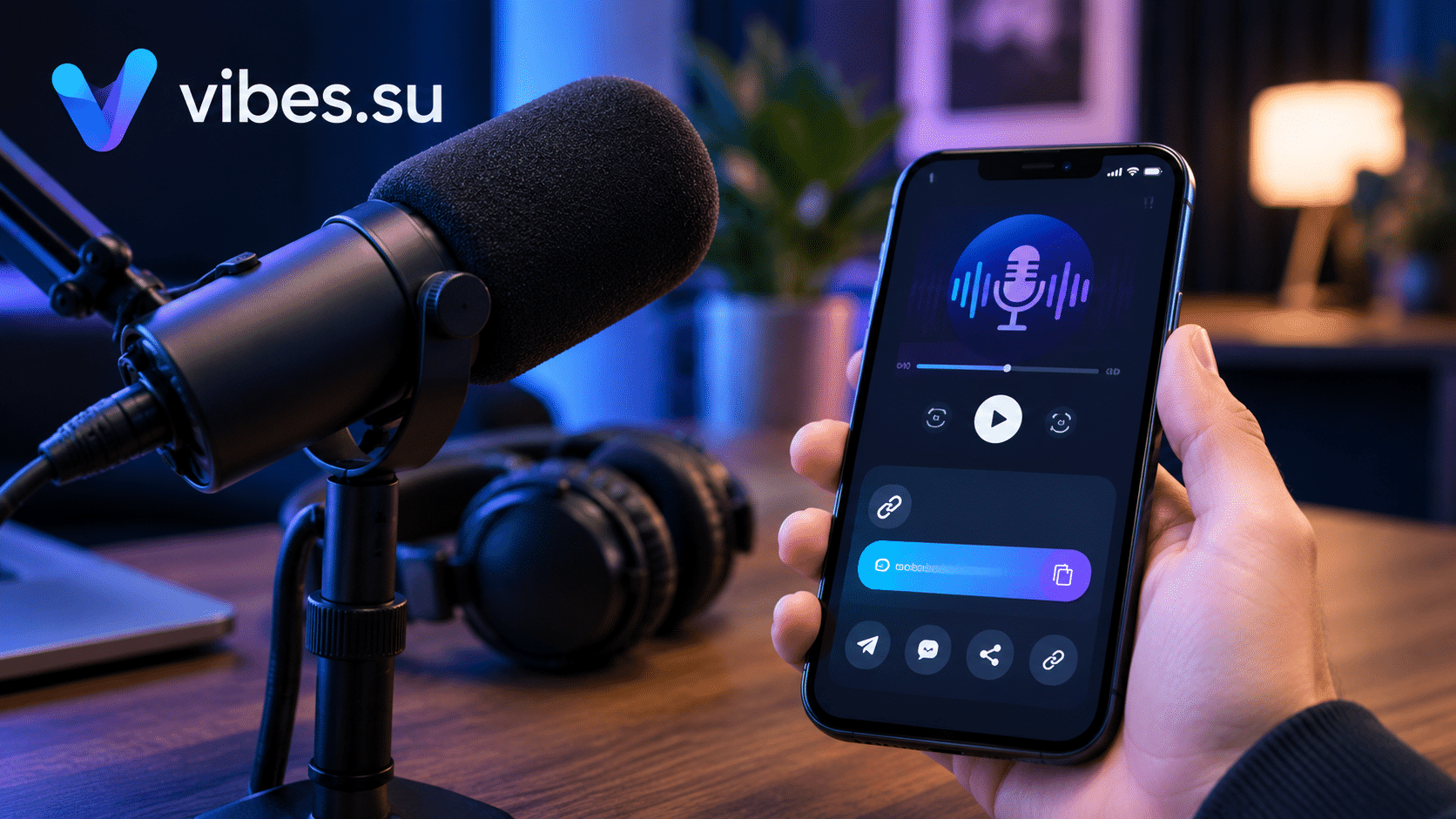
In a blog post, a link is one click away. In a video, it is usually in the description or on screen. In audio, there is no click. A listener cannot tap a link in a podcast. They have to hear it, remember it, and type it later. This changes everything about how a link should be presented.
A long URL with slashes, numbers, and unusual characters is almost impossible to remember after hearing it once. Even a medium-length URL is easily forgotten. This is why short links matter so much in audio: they are short enough to say, hear, and repeat, and simple enough to type without errors.
This article is about how to use short links in podcasts and audio content effectively. It covers what makes a link work in audio, how to present it, and what to avoid.
Why short links are essential in audio
The core problem with audio is that the listener cannot interact with the content while it is playing. They are often driving, walking, cooking, or doing something else. If they hear a link and want to visit it, they have two options: remember it and type it later, or forget it entirely.
Short links reduce the effort. A short link of five to seven characters is easy to hold in memory for a few minutes. A long URL is not. This is not a minor difference: it is the difference between a listener visiting the page and not visiting it at all.
Short links also reduce errors. If a listener types a short link like vibes.su/abc, the chance of a mistake is low. If they type a long URL with multiple slashes and parameters, the chance of error is much higher.
The third reason is consistency. If a podcast consistently uses a short domain for all links, listeners learn to recognize it. They know that when they hear that domain, it is a link worth remembering.
What makes a short link work in audio
Not every short link works well in audio. A few characteristics make a link easier to say, hear, and remember.
It is short. Five to seven characters after the domain is a good target. Longer than that and memory starts to fail.
It is pronounceable. A link that can be spoken naturally is easier to remember than one that requires spelling out letters or numbers.
It has no ambiguous characters. Characters like zero and the letter O, or one and the letter I, are easily confused when heard. If the link must use them, say them clearly and avoid mixing.
It is case-insensitive. If the service allows it, short links should work regardless of case. Listeners do not know if they should type uppercase or lowercase.
It has a clear domain. The domain should be easy to say and remember. If the domain itself is hard to pronounce, the whole link becomes harder.
It is consistent. If all links from a podcast use the same domain and a similar structure, listeners learn the pattern.
How to present a short link in a podcast
Presenting a link in audio is not just about saying it. It is about making sure the listener can catch it, remember it, and use it.
Say it slowly and clearly. A link said quickly is lost. Saying it twice, with a short pause, gives the listener a chance to catch it.
Say it in context. A link mentioned with a reason is easier to remember. For example: "If you want the checklist, go to vibes.su/list." The reason helps the listener remember why they wanted the link.
Repeat it at the end. If the link is important, mention it again before the end of the episode. Listeners who missed it the first time get a second chance.
Put it in the description. Even though the listener cannot click, they may look at the description later. The link should be there as well.
Use the same phrasing. If every episode uses the same phrase — "links are in the description" or "go to vibes.su" — listeners learn what to expect.
Avoid numbers unless necessary. Numbers are harder to remember than words. If the link contains numbers, say them clearly and slowly.
What to link to from a podcast
The destination matters as much as the link. If the link leads to a page that does not match what was promised, the listener may not try again.
Good destinations for podcast links:
— a page with the materials mentioned in the episode;
— a signup form for a newsletter or a course;
— a page with more episodes or related content;
— a page for a product or service mentioned in the episode;
— a contact page for questions or feedback.
What to avoid:
— a general homepage that does not match what was promised;
— a page that requires login before showing content;
— a page that loads slowly on mobile;
— a page that does not work.
The link should lead to exactly what the listener was told to expect. Anything else creates friction and reduces trust.
For a related look at how links are used in messaging, see Telegram notifications for short links.
How to handle multiple links in one episode
Many episodes mention more than one link. This creates a problem: the listener cannot remember several links at once.
A few approaches:
Use one main link. Instead of several, use one link that leads to a page with all the resources. The listener only has to remember one thing.
Use different links but put them in the description. If the listener is going to look at the description anyway, multiple links are fine. Just be clear that they are there.
Mention only the most important link in audio. If some links are secondary, mention them in the description only, not in the audio.
Repeat only the main link. If there is one link that matters most, repeat it at the end. Secondary links do not need repetition.
The general rule: the more links you mention in audio, the less likely any of them will be remembered. One main link is usually enough.
How to measure whether listeners use the link
Audio is harder to measure than web content, but there are signals.
Clicks on the short link. If the link is in the description, you can see how many people clicked it. If it is only in audio, you cannot see direct clicks, but you can see visits to the destination page.
Traffic patterns. If visits to the destination page spike after an episode is published, it is likely that listeners are visiting. If they do not spike, the link may not be working or may not be remembered.
Conversion. If the destination page has a signup or a purchase, you can see how many listeners converted. This is the most meaningful metric.
Feedback. Listeners may mention the link in messages or comments. This is informal but useful.
Repeat visitors. If the same people come back after subsequent episodes, the link is working as a long-term tool.
For context on tracking short link usage, see URL rotation and A/B testing for short links.
Common mistakes with short links in audio
A few mistakes come up often enough to be worth naming.
Mistake one: using a long link. It is almost impossible to remember after hearing it once.
Mistake two: saying the link too fast. A link said quickly is lost.
Mistake three: not repeating the link. Listeners who missed it the first time have no second chance.
Mistake four: mentioning too many links. The listener cannot remember several at once.
Mistake five: not putting the link in the description. Even if the listener cannot click, they may look later.
Mistake six: not testing the link. A link that does not work is worse than no link.
Mistake seven: using ambiguous characters. Numbers and letters that sound similar cause errors.
When short links in audio are not the right approach
Short links are useful in podcasts, but not always.
If the audience is not likely to visit a link after listening, the link may not be worth mentioning. If the content is consumed in situations where the listener cannot take action, the link may be forgotten.
If the destination page requires a lot of effort — a long form, a login, a complex process — the listener may not bother. If the link is not essential to the episode, it may be better to leave it out and keep the audio focused.
If the podcast does not have a consistent link structure, listeners may not learn to recognize the link. In that case, building that consistency is the first step.
Frequently asked questions
Why are short links important in podcasts?
Because listeners cannot click. They have to hear the link, remember it, and type it later. Short links are easier to remember and less prone to typing errors than long URLs.
How short should a podcast link be?
Five to seven characters after the domain is a good target. Anything longer is harder to remember after hearing it once.
Should I say the link more than once?
Yes. Say it slowly, repeat it, and mention it again at the end of the episode. Listeners who missed it the first time get a second chance.
What if I have multiple links in one episode?
Use one main link that leads to a page with all resources. Put the rest in the description. The more links you mention in audio, the less likely any of them will be remembered.
How do I know if listeners use the link?
Look at clicks on the link (if it is in the description), traffic patterns after the episode is published, conversions on the destination page, and repeat visitors. These signals tell you whether the link is working.
Can I use short links in audio ads as well?
Yes, the same principles apply. Short, pronounceable links are easier to remember and more likely to be used. The same rules about clarity, repetition, and avoiding ambiguous characters apply.
What is the biggest mistake with podcast links?
Using a long link that is impossible to remember, or saying it too fast. A short link said slowly and repeated is far more effective.