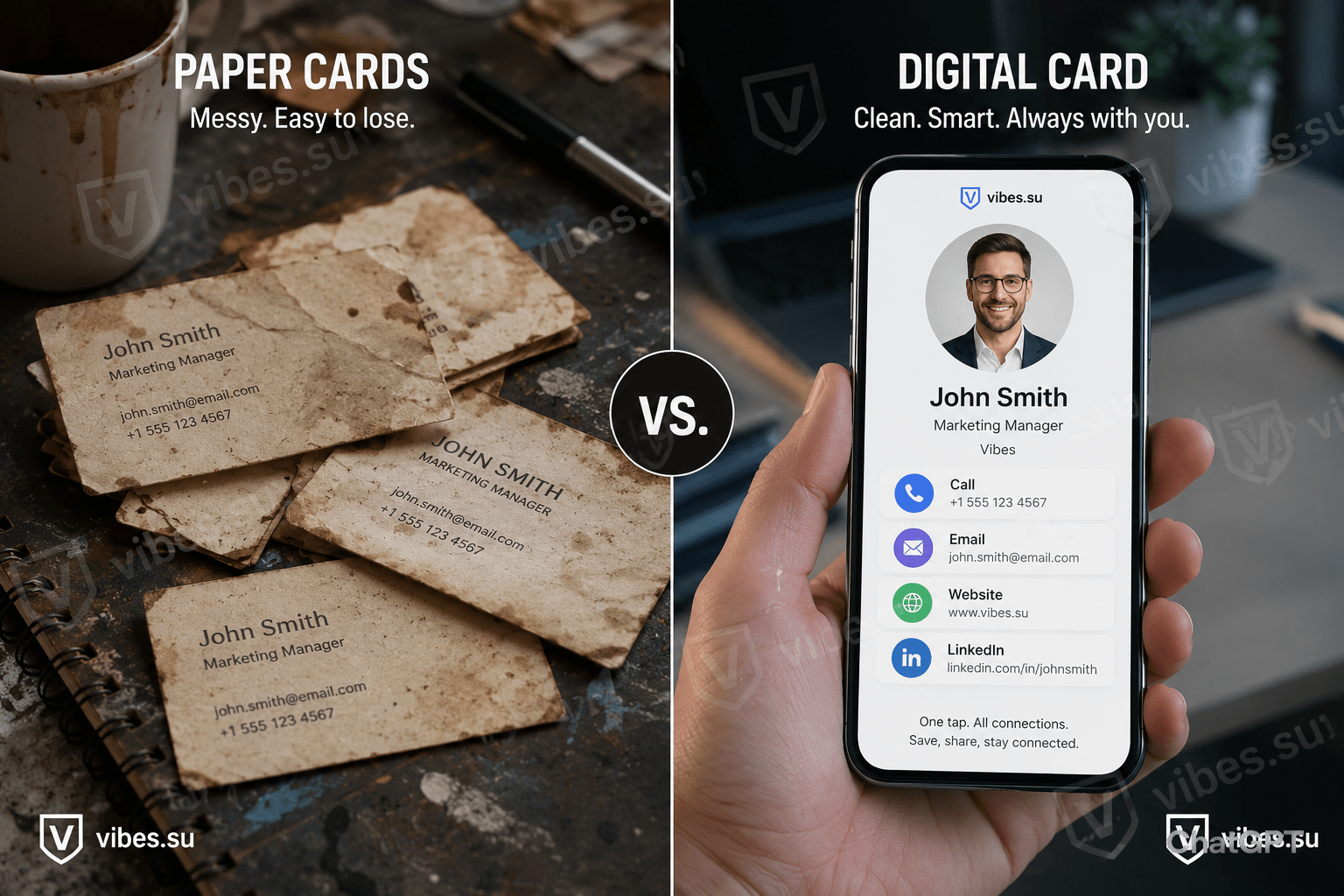
Paper cards end up in the wash, get lost, or sit in a drawer for years. Digital business cards solve the follow-up problem — if you design them for the recipient, not yourself.
The average paper business card has a lifespan of approximately six seconds. Someone hands it to you at a conference. You glance at it. You put it in your pocket. You find it three months later, wrinkled, and throw it away. Even if you are diligent and enter the contact into your phone immediately, the card itself was just an expensive piece of paper that conveyed information you could have received digitally in half the time.
The fundamental problem with paper
Paper cards are a one-way broadcast. They assume the recipient will take action: type in your number, visit your website, remember to follow up. In reality, follow-up rates from paper card exchanges are under 10%. The card sits in a wallet, gets wet in the rain, gets lost in a bag. Even the most beautiful letterpress card is useless if it cannot bridge the gap between meeting and action.
Digital cards remove the typing step
A digital business card delivers contact information in a format the phone already understands. Tap to call, tap to email, tap to open the website, tap to save the contact. Every action the recipient might take is one tap instead of manual data entry. The difference in follow-up rates is not marginal — it is the difference between a connection and a forgotten pocket square of cardstock.
NFC cards: the party trick that actually converts
NFC-enabled digital cards work without scanning a code or typing a URL. Hold the card near someone's phone and your contact page opens automatically. The novelty factor alone makes the interaction memorable, but the real value is friction elimination. At a busy networking event, the person who can share their details in one second gets saved; the person digging for paper cards gets forgotten.
What a digital card should include
Less is more. Name, title, company, photo. Phone and email as tappable links. One social profile — the one you actually maintain, not all seven. Website or portfolio. The fatal mistake is turning a digital card into a mini-resume. The card's job is not to tell your life story; it is to make saving your contact information effortless. Once saved, the recipient can explore your work at their own pace.
The follow-up automation nobody uses
A digital card can include a hidden superpower: automatic follow-up. When someone saves your contact, they can receive a pre-written message 24 hours later. Not spam — a simple «Great meeting you at the conference, here is the link to that case study we discussed». This single feature doubles follow-through rates because it removes the burden of remembering from both parties.