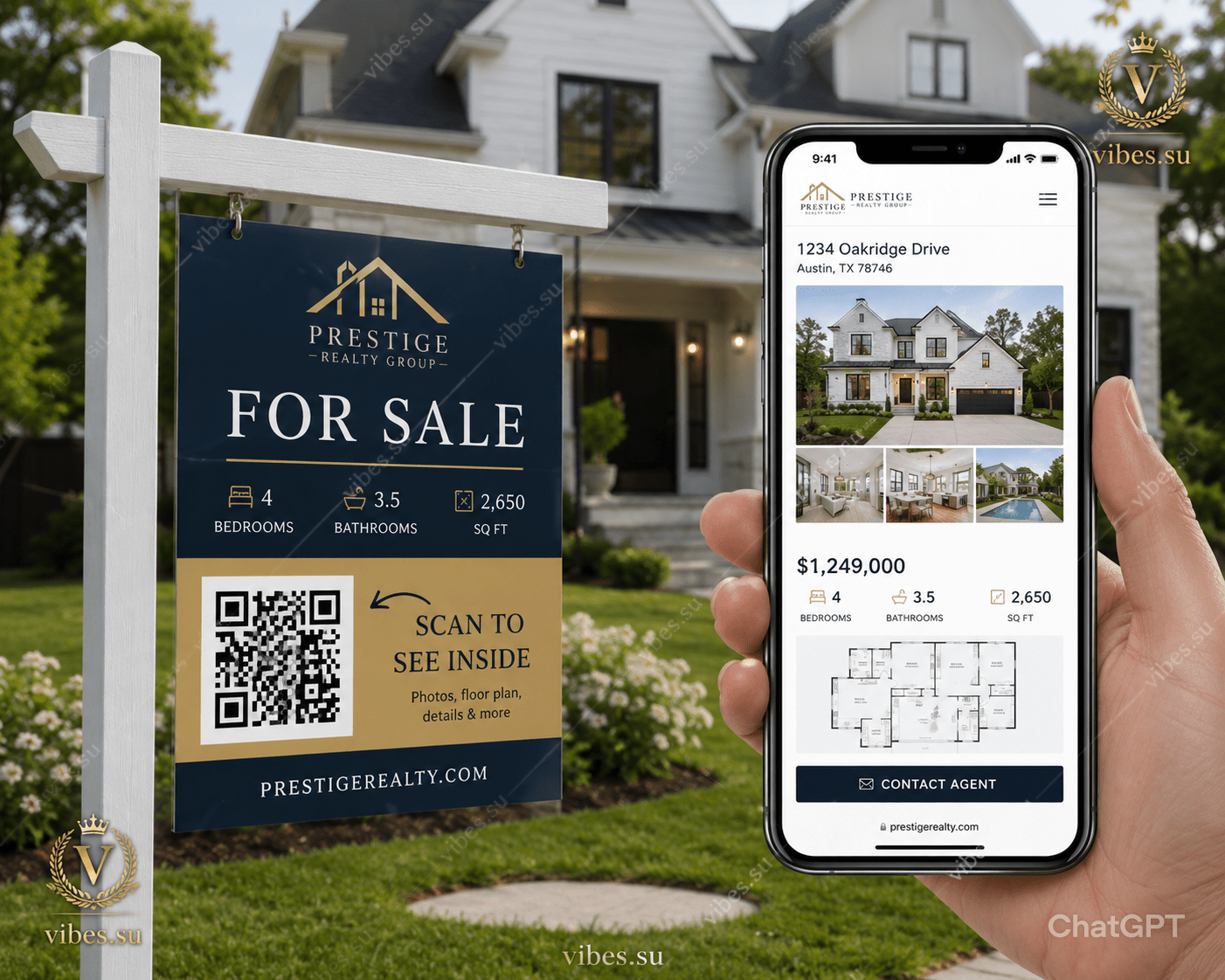
A real estate agent spent $200 monthly printing property brochures. One QR code on a yard sign now delivers photos, floor plans, and a contact form to every passerby.
The problem with printed brochures in real estate
James is a real estate agent handling residential properties in a mid-sized city. For every new listing, he ordered printed brochures: colour photos, floor plans, property details, his contact information. A box of 500 brochures cost about $40. With five active listings at any time, he spent $200 monthly on printing alone.
The brochures had three problems. First, they went out of date the moment a price changed or an open house was scheduled — reprinting cost more money. Second, most brochures disappeared into people's bags and were never seen again. Third, a brochure cannot show a video tour, cannot answer questions, and cannot capture a lead unless the person calls.
The switch
James replaced the printed brochures with a single digital page per property and a QR code on the yard sign. Now, someone walking past the property sees the sign, scans the QR code, and lands on a mobile page showing:
- professional photos of every room;
- a video walkthrough;
- the floor plan with measurements;
- price, property tax, and HOA fees;
- a contact form to request a viewing.
The page is built in Vibes and takes 15 minutes to create per listing. James reuses the same template, swapping out photos and details for each property.
What happened
Month 1: the QR code on one property sign was scanned 87 times. 12 people filled out the contact form. James saved $200 by not printing brochures.
Month 2: James added QR codes to all five listings. Total scans: 340. Contact form submissions: 45. Two properties received offers from buyers who discovered them solely through the QR code on the yard sign.
Month 3: James started adding the QR code to his business card and email signature. Now, when someone asks «what properties do you have?», James hands them a card with a QR code that opens a page listing all current properties — always up to date.
Why the QR code outperformed brochures
A brochure is a static object. A person picks it up, looks at it, and decides later whether to call. A digital page captures the lead immediately: the contact form is one tap away from the photos that generated the interest. The emotional peak — «I love this kitchen» — happens right next to the «Request Viewing» button.
A brochure cannot show a video. A digital page can. Listings with video receive 403% more inquiries than listings without, according to industry data. Every QR code on James's signs now leads to a page with a video walkthrough.
The analytics advantage
For the first time, James knows exactly how many people are interested in each property before they contact him. The digital page shows:
- how many people scanned the QR code;
- how many viewed the photos and for how long;
- how many watched the video and to what point;
- how many submitted the contact form.
When a seller asks «how is the marketing going?», James shows them the numbers. No agent with printed brochures can do that.
The numbers after 6 months
- printing costs: reduced from $200/month to $0;
- total QR scans across all listings: over 2,000;
- contact form submissions: 180;
- properties sold to buyers who first engaged via the digital page: 6;
- time saved not driving to the print shop and restocking brochure boxes: approximately 4 hours per month.